
Learn how to ensure enterprise AI security. Discover the main AI risks for businesses and how AI governance protects corporate data.
The promise of artificial intelligence in the business world is enormous: greater productivity, enhanced creativity, and smarter business decisions powered by AI. However, it also brings growing exposure to vulnerabilities and security risks.
In other words, the value AI creates can quickly become a source of risk if it is not designed with security in mind from the outset.
What was once managed mainly through cybersecurity or data governance must now also be addressed at the level of prompts, models, integrations, and automations that learn and respond in real time.
This leads to an uncomfortable but necessary question: is your company’s data really secure when using AI?
Because in the age of AI, data protection is no longer just a legal requirement; it is a business requirement for competing with confidence.
Enterprise AI security has become a strategic priority for organizations adopting generative AI.
Understanding the risks of AI in business and applying a strong AI governance framework is now essential to protect corporate data and maintain business trust.
What Is Enterprise AI Security and Why Is It Strategic?
Enterprise AI security refers to the set of measures, controls, and practices that ensure AI systems used within an organization operate reliably, protecting corporate data and reducing the risks of AI in business.
In the current landscape, with the rapid rise of generative AI, this discipline has evolved from a purely technical concern into a strategic business priority.
Security breaches in enterprise AI go far beyond the well-known issue of “AI hallucinations.” They can include accidental data leaks, extraction of sensitive information, the use of data without proper safeguards, or even the creation of new entry points into corporate systems.
For this reason, organizations need a comprehensive enterprise AI security framework that combines architecture, AI governance, regulatory compliance, and organizational culture.
Is Artificial Intelligence Safe for Businesses? Enterprise AI Security and Risks
The honest answer is: it depends on how AI is implemented, what controls are in place, and the level of data governance supporting its use.
Artificial intelligence (AI) is not inherently insecure by nature. When properly designed, it can even strengthen corporate defense systems, detect anomalies, and anticipate potential threats.
However, the risks of AI in business emerge when adoption takes place without a clear AI governance framework.
Many organizations have embraced generative AI tools with enthusiasm, but without establishing clear policies for secure and responsible AI use.
The result is rarely a sophisticated cyberattack. Instead, the risk is often more subtle: employees sharing sensitive information in open environments, integrations implemented without proper technical review, or AI models accessing critical data without adequate segmentation.
Much like what happened with cloud adoption in its early years, the technology itself was not the problem. The real issue was the absence of structure, control, and leadership.
What Does the Security of an AI System Depend On? What Does AI Security Depend On?
The security of an AI system or AI agent depends on several structural factors.
- First, the provider: not all vendors offer the same level of transparency, regulatory compliance, or contractual guarantees regarding data protection.
- Second, the architecture: how AI models are integrated with corporate systems, what level of access they have, and how information is segmented within the organization.
- Internal usage also plays a critical role. Even a well-configured AI system can become a risk if employees lack clear guidelines about what data they can share and in what context.
Ultimately, everything relies on strong data governance policies: data classification, retention rules, access control, auditing, and continuous monitoring.
In enterprise environments, enterprise AI security is not an additional feature but an architectural component that must be designed from the outset.
This means defining from the beginning which data AI models can access, under what permissions, with what level of traceability, and under which audit controls, just as would be required in any critical system architecture.
Difference Between Public AI and Enterprise AI
Using open genAI tools is not the same as operating in enterprise environments designed for isolation and control.
Public solutions, accessible from any browser, may not provide guarantees of data isolation or strict separation between organizations.
By contrast, enterprise AI is deployed in controlled environments, with data segregation, access controls, and regulatory compliance integrated from the design stage.
An example of this approach is enterprise AI solutions such as AI Query, which allow users to interact with corporate data using natural language while operating entirely within the organization’s secure environment. This ensures that permissions, semantic models, and data governance policies are respected at all times.
- If you are looking for an enterprise AI solution that operates under your own data protection policies, keeps full control within your environment, and does not share information with third parties, you can explore AI Query below.
For large organizations, the difference between public AI and enterprise AI is not merely technical — it is strategic. It determines whether innovation becomes a competitive advantage or an unnecessary exposure to risk.
Are Your Company’s Data Really Secure When Using AI?
Beyond whether AI is safe from an organizational perspective, there is an even more concrete question: what happens to your company’s data when it interacts with artificial intelligence systems?
AI data security mainly depends on three factors: the environment in which the AI operates, the provider’s data retention policies, and the level of isolation between organizations.
When information is entered into an AI system, that data may be processed, temporarily stored, logged to improve the model, or even transmitted through infrastructure that the organization does not directly control.
This is where AI data security stops being an abstract concept and becomes a critical matter of architecture and contractual guarantees.
The key factor is environment isolation. In public AI services, data may not be fully segregated by organization, and retention policies can vary depending on the provider.
In enterprise AI environments, by contrast, logical and contractual isolation mechanisms are implemented to ensure that information cannot be used to train global models or shared outside the authorized perimeter.
In this context, AI governance —or enterprise AI governance— becomes increasingly important. It is not only about controlling the models themselves, but also about establishing clear policies for AI usage, data protection, and the supervision of automated systems.
Ultimately, enterprise data protection and privacy in artificial intelligence cannot rely on implicit trust. They depend on clearly defined technical, legal, and operational safeguards.
Can AI Systems Be Trained with Your Company’s Data?
One of the most common questions raised in executive committees is straightforward: “Do AI systems use our data for training?” The answer is not universal. It depends on the type of service, the contractual terms, and the environment in which the AI is used.
First, it is important to clarify some concepts. AI model training is the process through which an algorithm learns from large volumes of data in order to identify patterns and generate responses.
This occurs before deployment. Inference, on the other hand, refers to what happens when a trained model receives a specific input —a prompt, a document, or a query— and produces an output. These are different stages, although they are often confused.
In public generative AI environments, some versions may use user interactions to improve the service, always under their own usage policies.
This is where one of the main generative AI risks for businesses emerges: entering sensitive information without knowing whether it will be stored, how long it will be retained, or for what purpose it may be used.
In enterprise AI solutions, the scenario is different. Enterprise-grade environments typically provide explicit guarantees: customer data is not used to train global models, logical isolation is maintained, and data retention controls are clearly defined.
When evaluating the security of AI tools in enterprises, the difference between a public version and a corporate environment governed by an enterprise contract becomes critical.
The key is not fear, but understanding.
Key AI Risks for Businesses and the Importance of Enterprise AI Governance
Talking about innovation without addressing risk is naïve. In the case of AI, the risks of artificial intelligence in business are not hypothetical; they are inherent to any AI adoption that is not supported by an AI governance framework.
The goal is not to slow down adoption, but to integrate risk management into a solid model of enterprise AI governance.
Confidential Data Leakage
The most immediate risk of artificial intelligence is AI data leakage. This occurs when employees enter strategic information —contracts, financial data, intellectual property— into tools that do not guarantee enterprise data isolation.
This type of data exposure can happen when generative AI tools are used outside a governed enterprise environment.
Misuse and Shadow AI
Shadow AI —the use of artificial intelligence tools that are not authorized by the IT department or operate outside approved corporate environments— is already a reality in many organizations.
Employees may start using AI on their own initiative, without oversight, technical validation, or awareness of internal policies.
Much like what happened with Shadow IT, the issue is rarely malicious intent. The real problem is the absence of AI governance and the lack of secure enterprise alternatives.
The risks of sharing sensitive information increase when there are no clear guidelines about which tools are approved and for what purposes.
Technological decentralization creates blind spots that escape auditing, monitoring, and regulatory oversight.
Training with Sensitive Data
As mentioned earlier, one of the most frequent concerns today is: “Are AI systems training on our data?”
If public versions are used without reviewing contractual terms, there may be a risk of data retention or reuse of information under certain policies.
Privacy in artificial intelligence largely depends on the environment. Enterprise AI solutions typically guarantee that customer data will not be used for global model training, but this distinction must always be validated contractually.
Without that clarity, the reputational risk can be significant.
Cyberattacks and New Vulnerabilities
Generative AI introduces new attack surfaces. Among the most relevant AI security vulnerabilities are prompt injection and model inversion.
Prompt Injection and Model Inversion
Prompt injection, explained simply, involves manipulating the instructions given to a model so that it reveals information it should not disclose or performs unintended actions. For example, an attacker may embed hidden instructions in a document that the system analyzes.
Model inversion, in simple terms, attempts to reconstruct sensitive data from the model’s outputs by exploiting patterns learned during training.
Agentic AI and Operational Autonomy
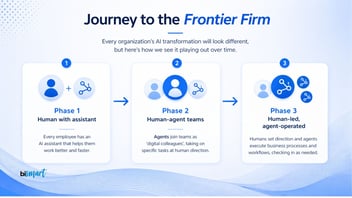
Another factor amplifying these risks is the emergence of agentic AI: systems capable not only of responding but also of making decisions and executing actions autonomously within digital environments.
When a model moves beyond conversational interaction and begins connecting to APIs, databases, or corporate systems, the potential risk surface increases significantly.
A configuration error, a malicious instruction, or insufficient supervision can have real operational consequences.
Prevent Your Data from Being Exposed When Using AI
Download the AI Query product document and discover how to apply enterprise AI with data isolation, access control, and integrated AI governance, all under your organization’s own data protection and governance policies.

What to Evaluate to Ensure an AI System Is Secure?
The adoption of artificial intelligence should not begin with an impressive demo, but with a strategic question: how do you choose secure AI for your organization?
Before implementing any solution, organizations should evaluate several key factors that determine its real level of protection.
1. Where is the data stored?
It is essential to understand in which region and under which jurisdiction the data will be hosted.
Operating under European regulations is not the same as operating in environments governed by different regulatory frameworks. Knowing where data resides is the first step toward ensuring data protection.
2. Is the data used for model training?
This is a critical question: is data entered into the system used to train global models, or is it limited to inference only?
This distinction should be clearly defined in both the contract and the technical documentation.
3. What level of encryption and access control is provided?
Any enterprise solution should provide encryption both in transit and at rest, as well as strong authentication mechanisms and robust access control policies.
AI systems must not become a backdoor into the corporate environment.
4. Is there traceability and auditing capability?
Can the organization track who uses the tool, what type of information is entered, and what actions the system performs?
The ability to audit interactions is essential for detecting anomalies and meeting regulatory requirements.
5. Does it comply with current regulations?
Enterprise AI security cannot be separated from the regulatory environment.
Regulations such as GDPR and the European AI Act require not only data protection but also traceability, human oversight, risk management, and proper technical documentation.
6. Is there real environment isolation?
Finally, ensure there is logical segregation between organizations and that your data are not mixed with those of third parties.
This point is critical when deciding what to evaluate before implementing enterprise AI in large organizations.
Regulation and the Future of AI Security
The regulation of artificial intelligence is no longer a hypothesis, it is an evolving reality.
Europe has taken the lead with the AI Act, the first comprehensive regulatory framework that classifies AI systems according to their level of risk and establishes specific obligations regarding transparency, data management, human oversight, and impact assessments.
However, this trend is not limited to Europe. The United States, Asia, and international organizations are also moving toward regulatory models that will require greater traceability and corporate accountability in the use of AI.
In this context, AI regulatory compliance is no longer just a legal matter. It is becoming a strategic dimension of enterprise technology adoption.
Organizations that integrate data security and data governance by design will be better positioned when facing audits, investors, and customers.
What Does European AI Regulation Require?
The EU AI Act introduces differentiated obligations depending on the level of risk associated with an AI system. These requirements include technical documentation, data quality controls, human oversight mechanisms, and strict compliance obligations for high-risk AI systems.
In this context, transparency is no longer optional.
The Importance of AI Governance and Responsible AI
Beyond legal compliance, the market increasingly demands trust. The combination of AI governance, operational ethics, and risk management will determine which organizations lead in this new technological era. Security will not only be a regulatory requirement but also a factor of competitive advantage.
Responsible AI goes beyond data protection. It also requires algorithmic transparency and the ability to explain how AI systems produce their outcomes, what is commonly referred to as Explainable AI (XAI). Without explainability, there can be no real trust or sustainable compliance.
Frequently Asked Questions About AI Security
Can artificial intelligence leak confidential data?
Yes, this can happen if AI systems are used without proper controls. AI does not “decide” to leak information, but if an employee enters sensitive data into a tool without enterprise data isolation or clear usage policies, exposure can occur.
The key factors are the environment, the configuration, and strong AI governance.
What risks does artificial intelligence pose?
The main risks include data leakage, unauthorized usage such as Shadow AI, emerging vulnerabilities like prompt injection, and potential regulatory compliance issues.
The risks of AI in business are not only technical; they can also be legal and reputational.
How can organizations protect data when using AI?
By implementing clear internal policies, establishing proper data classification, training employees on responsible AI use, and selecting providers that guarantee encryption, data isolation, and regulatory compliance.
In practice, AI data protection begins even before the first prompt is written.
What should companies evaluate before implementing AI?
Organizations should analyze where their data will be stored, whether it may be used for model training, what level of access control the system provides, what auditing capabilities exist, and whether the solution complies with regulations such as GDPR or the EU AI Act.
Adopting AI should always be a strategic decision, not an improvised one.
Conclusion: AI Is Not the Risk; Lack of Control Is
Artificial intelligence is not inherently a threat to businesses. On the contrary, it represents one of the greatest opportunities in recent decades to improve productivity, data analysis, and decision-making. The real risk lies not in the technology itself, but in adopting it without structure, oversight, or responsibility.
Security does not mean avoiding AI. It means understanding it and designing its use with clear principles of AI governance, control, and data protection from the outset. Organizations that treat AI as a strategic capability —rather than an isolated experiment— are the ones that successfully balance innovation with trust.
In this context, ensuring enterprise AI security requires applying a strong AI governance model that allows organizations to manage the risks of AI in business while protecting corporate data.
If you want to apply artificial intelligence in your organization without compromising data security or losing control over corporate information, you can download the AI Query's product brochure and discover how to implement enterprise AI with data isolation, access control, and integrated governance.