
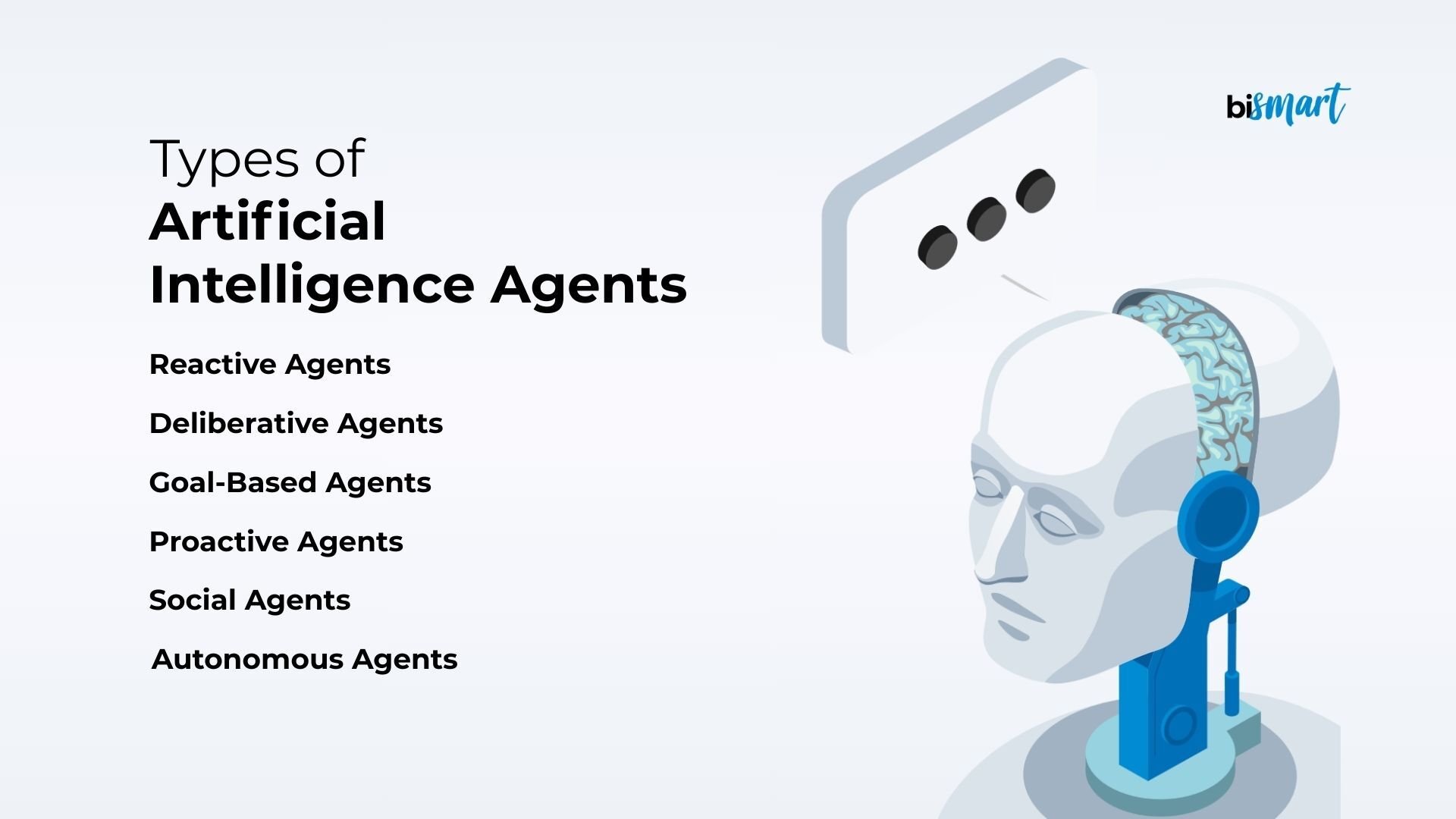
What types of AI agents are there and what are they for? We talk about reactive, deliberative, goal-based, proactive and autonomous agents.
As artificial intelligence (AI) continues to advance across the business landscape, AI agents are taking on a decisive role in automation, operational optimization, and strategic decision-making.
However, a wide range of approaches coexist under this concept. Not all agents behave the same way, nor do they offer the same level of autonomy, intelligence, or adaptability. While some solutions simply react to basic events, others can reason, plan, anticipate needs, and even act autonomously within critical business processes.
This diversity makes it essential to understand which types of AI agents exist and in which scenarios each one delivers the greatest impact.
In an environment where efficiency, scalability, and fast decision-making are top priorities, knowing the differences between reactive agents, deliberative agents, goal-based agents, proactive agents, social agents, and autonomous agents has become a strategic requirement for any organization looking to leverage artificial intelligence effectively.
In this article, we take an in-depth look at the main types of AI agents, how they work, the capabilities that set them apart, and their most relevant business applications.
The goal: to help you identify which type of agent your organization needs to advance toward more intelligent, flexible, and competitive operating models.
In our latest blog post, we explored the rise of AI agents in the business world, looking at what they can do and the most relevant use cases for companies today.
For organizations that want to adopt this technology, it’s crucial to understand the different types of AI agents, what each one is designed to do, and which types are best suited to specific business goals.
With this clarity, companies can design solutions that truly align with their objectives and get the most value out of their AI investments.

Types of AI Agents and How They Work in the Enterprise
Before exploring each category, it is important to understand that AI agent types represent different design philosophies and varying levels of autonomy.
Among them, the contrast between reactive agents and proactive agents is especially relevant, as it illustrates how each type integrates into process automation, operational efficiency, decision support, and broader digital transformation initiatives.
This high-level overview helps clarify not only what an AI agent is, but also how these agents are deployed across enterprises to handle complex tasks autonomously.
Each model plays a distinct role within the organization, ,ranging from simple, repetitive actions to advanced processes that require reasoning, planning, or contextual understanding.
Below, we examine the main categories of AI agents currently used in corporate environments, beginning with the most fundamental: the reactive agent.
1. Reactive Agents: Immediate, Rule-Based Responses

Reactive agents are the simplest form of AI agent. They operate on a direct perceive-and-act principle, with no internal memory, no reasoning capabilities, and no forward planning.
These rule-based agents are designed to deliver immediate responses to environmental stimuli. They follow a straightforward event–condition–action model, making them ideal for highly specific and well-defined automations.
Reactive Agent: Use Cases
A basic tech-support chatbot that generates automated responses when it detects certain keywords in a user’s question is a classic example of a pure reactive agent, limited in scope, but extremely efficient for simple tasks.
Similarly, many robotic process automation (RPA) bots fall within this category. These agents are triggered by an event —such as the arrival of an invoice— and execute a predefined sequence of steps (extracting data, validating it, and updating a system).
They operate strictly according to their script, which makes them highly reliable and well-suited for structured enterprise automation scenarios.
The main advantage of reactive agents is their speed and simplicity. Because they do not require complex calculations or historical context, they can respond to immediate conditions in real time. For simple and well-defined tasks, they are highly efficient and extremely reliable.
However, these agents do not “think” long term. They do not learn or adapt their behavior beyond the predefined rules they were built with. As a result, they are unable to manage unforeseen situations or optimize processes on their own initiative.
In a dynamic business environment, their role is limited to basic automation and specific, isolated reactions, unlike more advanced AI agents that offer reasoning, planning, or autonomous decision-making capabilities, which we explore in the sections that follow.
2. Deliberative Agents: Planning and Strategic Reasoning

As business needs grow in complexity, deliberative agents emerge as a key category of AI agents used in corporate environments. Also known as cognitive agents or planning agents, these systems maintain an internal state or model of the world and can reason about future scenarios before taking action.
This deliberative approach makes them essential for organizations looking to go beyond simple, rule-based automation and towards more intelligent, adaptive systems.
Rather than reacting instantly —as reactive agents do— a deliberative agent analyzes historical data, current conditions, and contextual variables to anticipate outcomes and develop an optimal plan of action.
In simple terms, it thinks before it acts, using models and reasoning techniques that allow it to evaluate multiple possibilities before making a decision.
Deliberative Agent: Use Cases
Consider an AI agent designed for logistics route planning. A reactive agent would simply choose a route based on current traffic, but a deliberative agent goes much further. It factors in historical traffic patterns, weather forecasts, and even scheduled city events to calculate the most efficient route.
This ability to evaluate future scenarios is one of the defining characteristics of deliberative agents.
Similarly, a deliberative agent in retail inventory management can analyze past sales data, seasonality, and market trends to predict future demand and automatically adjust stock levels. These capabilities allow companies to anticipate rather than merely react, resulting in more strategic decision-making.
The presence of an internal model, combined with planning algorithms, gives these systems a form of “business reasoning,” making them ideal for complex tasks that involve multiple variables, dependencies, and consequences.
They are particularly valuable in supply chain optimization, financial planning, production scheduling, or any process that relies on predictive analytics.
However, this sophistication comes with greater computational and design complexity. Deliberative agents are typically slower than reactive agents —because they must reason before acting— and they require high-quality data and accurate models to operate reliably.
In practice, many organizations choose to combine both approaches, creating hybrid agents that incorporate reactive and deliberative capabilities. This hybrid model is increasingly common in modern enterprise AI solutions, where agility and predictive power are essential.
Prepare Your Data for Artificial Intelligence
The true potential of AI can only be unlocked when an organization works with governed, secure, and high-quality data. Before training models, automating processes, or deploying intelligent assistants, it is essential to establish a strong and reliable data foundation.
“AI adoption doesn’t start with the algorithms. It starts with the data.”
At Bismart, we help companies prepare, integrate, and govern their data so that AI systems operate with accuracy, security, and real business impact.

3. Goal-Based Agents: AI Designed to Achieve Specific Objectives

Within the broader category of deliberative agents, goal-based agents stand out as systems specifically designed to plan and execute actions aimed at achieving a clearly defined objective—whether set by the user or the organization.
Their decision logic revolves around a fundamental question: “Which action brings me closer to achieving my goal?”
Unlike purely reactive agents, goal-based agents conduct an intelligent search across multiple alternatives, evaluating which options lead most effectively to the desired outcome. They can also replan dynamically when conditions change, making them powerful tools for results-oriented enterprise AI.
Goal-Based Agent: Use Cases
A strong enterprise example is an AI agent integrated into a sales CRM with the objective of identifying the leads most likely to convert.
This goal-based agent analyzes multiple data sources—web activity, past interactions, demographic information—to assign a priority score to each prospect, automatically optimizing the sales team’s pipeline. In essence, it continually asks: “Which lead should I pursue first to maximize sales?”
With Bismart ABC Client Analysis, you can segment your customer portfolio, identify high-value clients, prioritize commercial efforts, and make strategic, data-driven decisions that directly impact business performance.

ABC Client Analysis
Discover how to segment your customers according to their real value and prioritize your commercial actions with data, just as Amazon anticipates demand before it occurs.
Another case study would be an agent whose goal is to minimize downtime in an industrial plant: he monitors production, detects bottlenecks or incipient failures and takes actions (or recommends measures) to avoid downtime.
Its goal is clear: to maximize the operational availability of the lines.
Utility-Based Agents
Within the broader family of goal-based agents, there is a more sophisticated variant: the utility-based agent. Instead of pursuing a single binary objective, these agents optimize a utility function, weighing costs and benefits to select the most advantageous option at any given moment.
For example, a logistics-focused agent may evaluate multiple delivery routes —considering time, cost, constraints, and service levels— to determine which option delivers the greatest overall value to the operation.
Both goal-based and utility-based agents share the core deliberative trait: they analyze options, compare alternatives, and select the best strategy according to predefined criteria.
In the corporate environment, this goal-oriented approach translates into aligning the agent’s actions with key business indicators.
Whether the goal is improving sales conversion, reducing logistics costs, or increasing customer satisfaction, these intelligent agents act with a clear purpose—making them essential components within the different types of AI agents applied in enterprise environments.
4. Proactive Agents: Anticipation and Autonomous Action

We now move into a category of agents that represents the most innovative frontier of artificial intelligence in the business environment: proactive agents.
Historically, most AI systems have been reactive—waiting for an instruction or an event before acting—which limited their ability to deliver value beyond basic automation.
In contrast, a proactive agent does not wait for commands. It anticipates needs, makes autonomous decisions, and executes tasks on its own initiative. This behavior brings it closer to modern autonomous agents, capable of analyzing context, detecting early signals, and acting without continuous supervision.
In essence, while a reactive agent resembles an employee who performs tasks only when asked, a proactive agent behaves like an ideal colleague who identifies opportunities or problems before they surface—and acts to address them.
This distinction between reactive and proactive is fundamental within the types of AI agents deployed in organizations today.
The difference becomes even clearer when we look at practical examples.
Proactive Agent: Use Cases
Consider the customer service context: a conventional, reactive chatbot responds only when a user asks a question or submits a complaint.
A proactive agent, however, can anticipate the situation. For example, it may automatically detect that a customer is struggling to complete a purchase and intervene by offering assistance before the user requests help.
In fact, many modern e-commerce bots display proactive behaviors when they detect that a user is stuck during the checkout process, appearing with suggestions or alternative paths to help complete the transaction.
This anticipatory approach improves both the customer experience and conversion rates.
Another key example is predictive maintenance. A proactive AI agent can monitor machine parameters —such as temperature, vibration, and performance— in real time, anticipating a potential failure and scheduling maintenance before a serious incident occurs.
Instead of reacting to a breakdown, it prevents it, reducing costs and minimizing operational disruptions.
A Real Example Where Anticipation Made the Difference
Discover how a manufacturing company reduced more than eight hours of weekly downtime thanks to diagnostic analytics capable of detecting issues before they impacted operations.
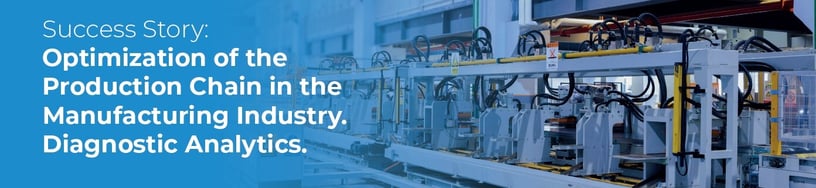

This is a clear example of how AI-driven deep analytics can transform processes, optimize costs, and strengthen business continuity.
Proactive agents are made possible by advances in machine learning, large language models (LLMs), contextual memory, and planning capabilities that enable AI systems to continuously learn, manage complex decisions, and act with increasing levels of autonomy.
In corporate environments, these agents are now emerging in tools like Copilot—an AI assistant that not only responds to commands in Word or Excel, but can suggest content ideas, generate meeting summaries autonomously, or recommend next steps in a project.
In other words, it acts as a proactive digital copilot, rather than a simple executor of instructions.
💡 Did you know...?
Fabric Copilot Capacity (FCC) is now available for all Fabric Capabilities.
The strategic advantage of these agents is significant: they can identify opportunities or risks before they become apparent, enabling the company to solve problems before they occur and seize opportunities before the competition does.
Of course, this autonomy requires clear control, governance and oversight frameworks.
Organizations must define limits of action-for example, how far a proactive agent can go without human approval-to ensure that these autonomous actions are aligned with internal policies, corporate ethics and strategic objectives.
5. Social Agents: Interaction and Collaboration with Humans (and other Agents)

Not all AI agents work alone; many are specifically designed to interact socially with humans and with other agents within larger systems.
Social agents are characterized by communication skills, contextual understanding, and social intelligence, enabling them to collaborate, converse, and maintain fluid interactions with humans and other intelligent agents.
In the business context, this translates mainly into conversational agents: advanced chatbots, corporate virtual assistants and conversational AI systems that interact through natural language with employees, customers or managers.
These natural interfaces facilitate the adoption of AI within the enterprise and make the technology an accessible resource for all profiles.
Social Agent: Use Cases
A clear example is virtual assistants integrated into messaging platforms or corporate intranets. These social agents can answer employee questions about internal policies, IT requests or HR processes in a conversational and personalized way, behaving like an expert partner available 24/7.
Unlike a simple static FAQ, a social agent understands the user's natural language and context, adapting its answers in real time.
In customer service, chatbots powered by language models such as GPT go beyond providing accurate information: they can maintain an empathetic tone, follow the thread of the conversation and even interpret the customer's mood.
This makes it possible to create more human and satisfying support experiences, scaling service capacity without proportionally increasing teams.
But the term "social" also encompasses collaboration between agents. In multi-agent systems, several AI agents can communicate with each other to share tasks, negotiate solutions or coordinate actions, simulating team behavior.
For example, in logistics, one agent may be in charge of warehouse management while another manages transport fleets; if a delay is detected, both agents dialogue to readjust the delivery plan efficiently.
This type of agent-agent interaction is possible thanks to common communication protocols, shared memory and a partial understanding of the environment.
In fact, recent studies show thatwell-designedAI agents can develop social conventions of their own when collaborating in groups, improving coordination without human intervention and optimizing their collective capability.
In short, social agents add a dimension of emotional, communicative and collaborative intelligence to enterprise AI.
Their benefits are remarkable: they provide more natural interfaces through spoken or written language, facilitate the adoption of AI solutions by being more intuitive, and allow AI to be integrated into work teams as if it were an additional member.
AI Query: the smarter way to access your data
The solution transforms your data into immediate knowledge, improving productivity and democratizing access to information across the organization.
In most organizations, data is available... but not accessible. AI Query removes this barrier by allowing any user - without technical knowledge - to query, explore and get answers from your data in natural language, quickly, accurately and securely.

6. Autonomous Agents: Towards Intelligent Automation of Complex Processes

When we combine high autonomy, proactive capacity, deliberative reasoning and continuous interaction with the environment, we obtain the so-called autonomous AI agents, considered the most advanced level within the types of artificial intelligence agents applied in the business world.
An autonomous agent is, essentially, a system capable of making decisions and acting independently to achieve the goals set, without depending on constant instructions.
In the corporate context, this implies delegating complete processes or even critical workflows to these agents, relying on them to execute tasks, coordinate with other systems and adapt to circumstances while maintaining business objectives.
Many of the agents mentioned above (reactive, deliberative, goal-based, proactive) can operate with varying degrees of autonomy. But autonomous ones have a higher level: agents designed to work without human intervention in most cases, supervised more by results than by intermediate steps.
Autonomous Agent: Use Cases
A clear example is autonomous background processes, as described by Google: agents that work behind the scenes analyzing data, optimizing routine processes and even proactively detecting and solving problems.
All this with minimal or no human interaction, representing a quantum leap towards intelligent automation.
Think of an autonomous financial broker: connected to market feeds and internal databases, it can analyze economic conditions in real time and make investment decisions or adjust portfolios automatically within predefined limits.
In fact, modern stock markets abound with such agents - such as algorithmic trading systems - that react in microseconds and execute trades faster than any human could.
Another relevant case is that of operations and supply chain.
Imagine an autonomous agent that monitors sales, inventory, production and logistics in an integrated way.
If it detects that a product is starting to oversell, the agent could adjust production, ensure supply through rush orders or redistribute stock between warehouses.
All while respecting business rules, budgets and service level agreements, alerting human managers only when a higher-level strategic decision is required.
Some pioneering organizations are already moving in this direction. The London Stock Exchange Group (LSEG), for example, is working with AI startups to integrate agents capable of analyzing real-time financial information and making automated decisions in highly regulated environments.
These deployments show the real scope for AI autonomy in mission-critical functions.
Autonomous AI Agents: Complications
Deploying autonomous agents on a large scale requires facing significant challenges.
Their success depends primarily on having a robust, governed and reliable data environment, as well as a data architecture ready to integrate them with the rest of the systems.
The real frontier of this autonomous AI is not the algorithm, but the data infrastructure that supports it.
Is your data ready to work with AI?
|
|
|
All with a clear objective: to pave the way for this new wave of intelligent automation driven by autonomous agents that make decisions, act and optimize operations in real time.
Conclusion: AI Agents, The Path to a Smarter Enterprise
In conclusion, different types of AI agents - from the simplest reactive to the most advanced autonomous, deliberative and proactive - are already transforming the modern enterprise.
Each category brings unique capabilities to automate operations, improve efficiency, personalize experiences, and support strategic data-driven decisions.
Far from replacing human intelligence, these agents empower it, freeing people from mechanical tasks and expanding their analytical capabilities.
The enterprise that adopts effective AI agents can turn data into action with unprecedented speed and accuracy, becoming more agile, intelligent and competitive.
We are entering a new era of agentic AI, where intelligent agents are establishing themselves as active contributors within organizations.
Preparing the infrastructure, teams and culture for their arrival is the immediate challenge - and opportunity - for today's business leaders. Those who succeed will be defining the future of their industries through an efficient symbiosis between artificial and human intelligence.
The time to start is now: the companies that act first will define the competitive advantage of the next decade.
Take the next step toward AI that's ready for your business.
Want to identify which processes in your organization can be automated with AI?
Or do you need to understand how to prepare and govern your data for AI to work accurately, securely and compliantly?
At Bismart, we offer you a free consultancy where we analyze:
- The potential for automation in your processes.
- The state of your data governance.
- What you need to build a solid foundation to enable AI to deliver real value.
Book a meeting with our experts and start designing a secure, scalable and reliable data-driven AI strategy.